 CS Plants
Home › Care › Staghorn Ferns After Shipping
Staghorn Ferns (Platycerium) After Shipping: How to Help Them Recover
Platycerium, commonly called staghorn fern, often looks tired after a trip in a box. We pack and export Platycerium from Taiwan, and this is the routine we give buyers for the first few weeks after the plants arrive.
What shipping does to a Platycerium
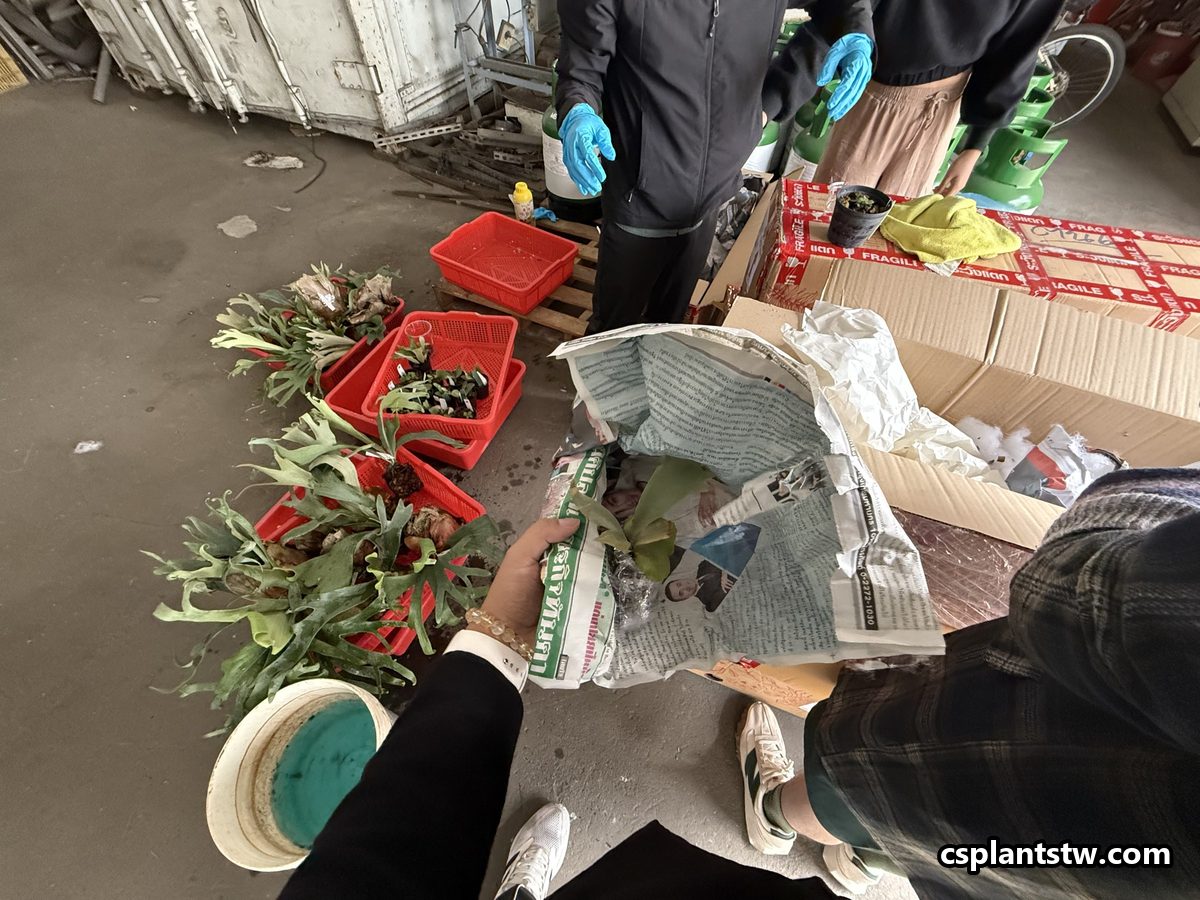
Time in a box shows on the older fronds: some get creased or marked. That damage does not heal: a marked frond stays marked. It does not decide whether the plant lives, though. What matters is the bud, the growing point at the centre of the plant that every new frond and root comes from. Judge the plant by the bud, not the old fronds.
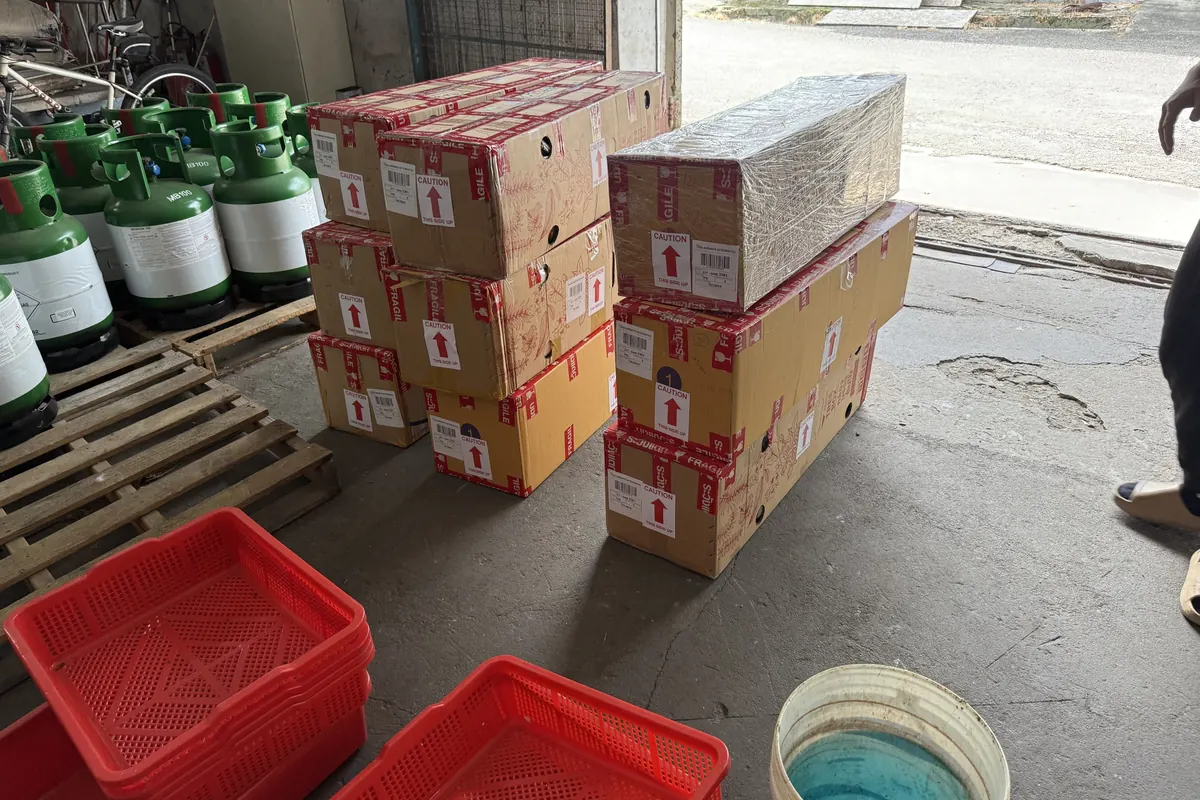
How plants travel also depends on where they are going. Most of our markets receive plants with their growing medium intact. The USA and Canada require plants to arrive bare-root. See bare-root shipping.
The first weeks, step by step
- Check the central bud first. If it is firm and plump, the plant is healthy, even if older fronds were marked in transit.
- Water once, then keep it cool. Water the medium once. Then keep the plant out of direct sun and heat.
- Wait before mounting. Let it settle in a pot for two weeks before you mount it. When you do, follow how to mount a staghorn fern.
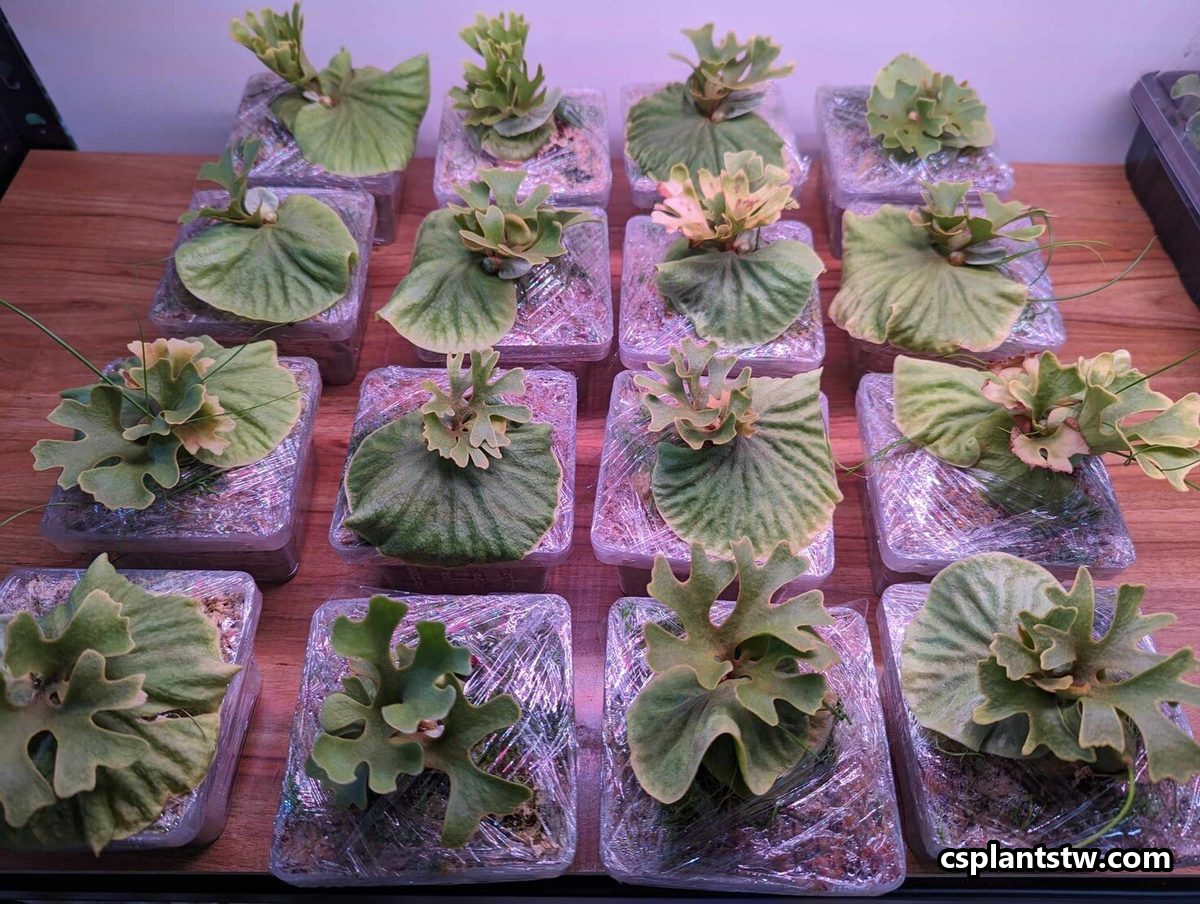
- Nurse the delicate ones. Put dwarfs, P. ridleyi and any weak plant in a clear, closed container (a nursing box) in bright, indirect light. Water only when it feels light, about every 3–5 days.
- Keep new plants apart. Keep new arrivals away from your collection, and check them for pests before you mix them in. The Textbook's pests and diseases chart helps.
- Trim later, not now. Damaged fronds still shelter the bud. Leave them on until new fronds open, then trim them.
The nursing box
A nursing box is a clear container with a lid. It keeps humidity near 100% around a recovering plant, and it is the only place Platycerium should sit in air that humid. Out of the box, aim for 50–80% with moving air. Put the box in bright, indirect light, and water only when the plant feels light. Use one for dwarfs, for P. ridleyi, and for any plant that arrives weak.
Two things to leave alone
The old brown shield fronds. They look dead, but they protect the roots and hold water. Never peel them off, even if they were scuffed in the box.
The fine white hairs on the fronds. Many Platycerium, P. willinckii and P. veitchii among them, have a silvery felt on the fronds. It cuts water loss, so do not wipe it off, even if it was rubbed in transit.
Don't feed yet
Do not fertilise a plant that is still recovering. Wait until it is growing actively again, then follow the feeding notes in the care quick reference.
Give it a few weeks
Most plants settle within a few weeks. Give them that time before you judge them, and before you resell them. If a plant's bud is soft or dark when you unpack it, message us with a photo straight away.
Buying for a shop or nursery?
We supply Platycerium wholesale from Taiwan, with plants sourced from partner growers in Thailand and Japan, and we can talk you through how each species and size handles the trip to your country. See Platycerium wholesale and how to order.
Keep reading
Looking for plants? See Platycerium by type, with mother-plant photos, or the full availability list.
Questions about a plant? Ask us on WhatsApp, email or Instagram.