 CS Plants
Home › Care
Staghorn Fern (Platycerium) Care Guide — Quick Reference
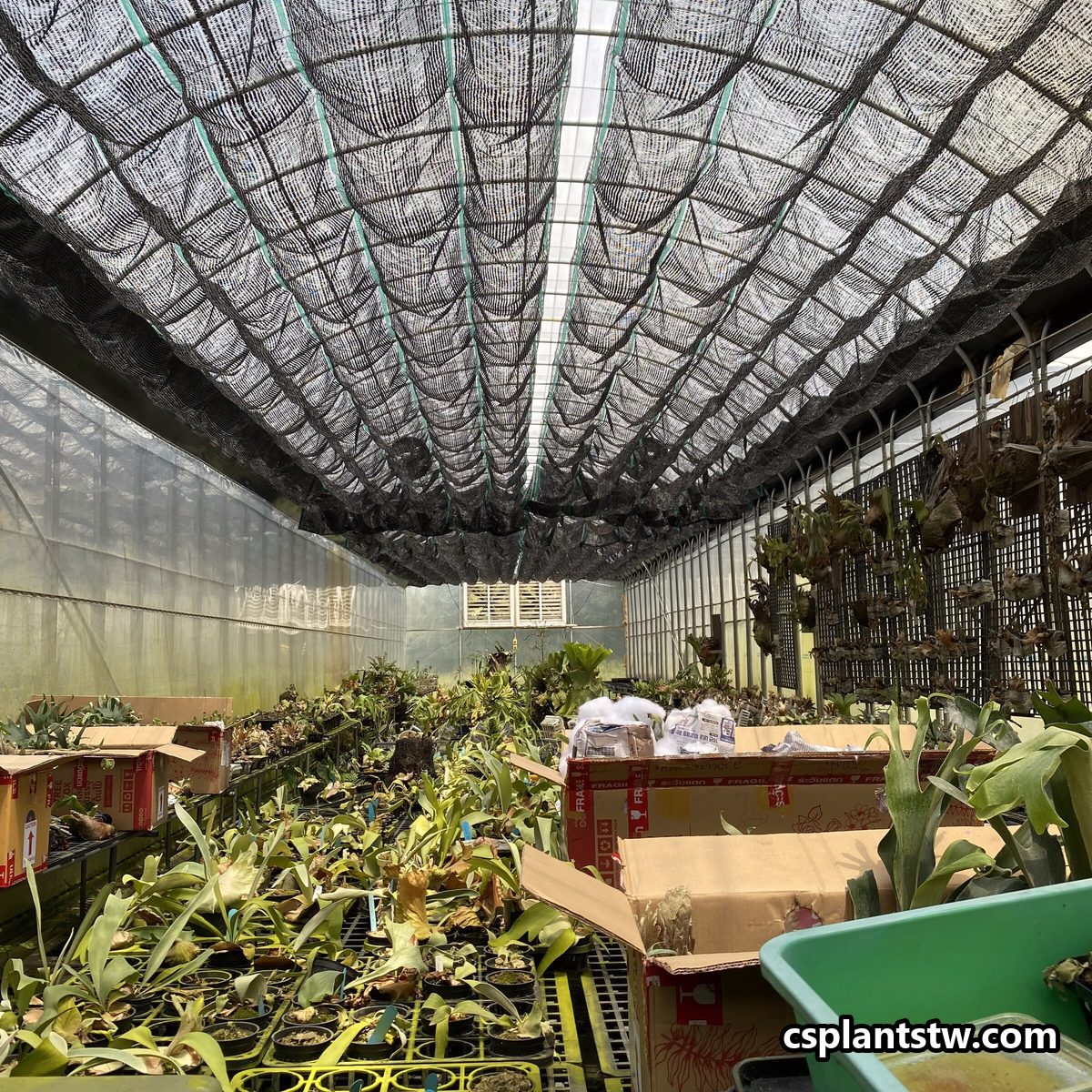
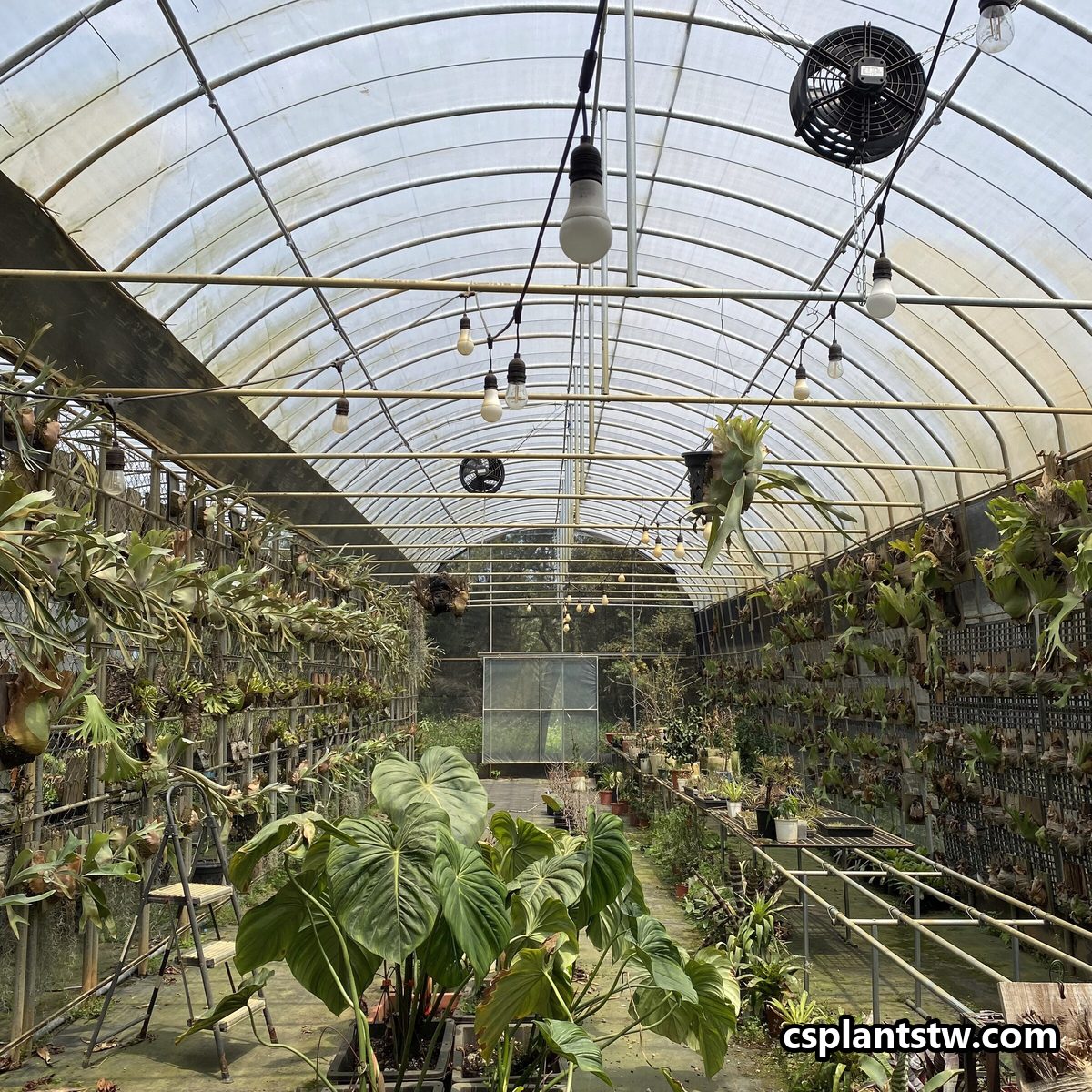
Platycerium, commonly called staghorn fern, is a genus of epiphytic ferns that grow on trees and rocks. This page sums up how we grow Platycerium in our Taiwan greenhouse, on one screen. Each row links to the full chapter in our free Platycerium Textbook.
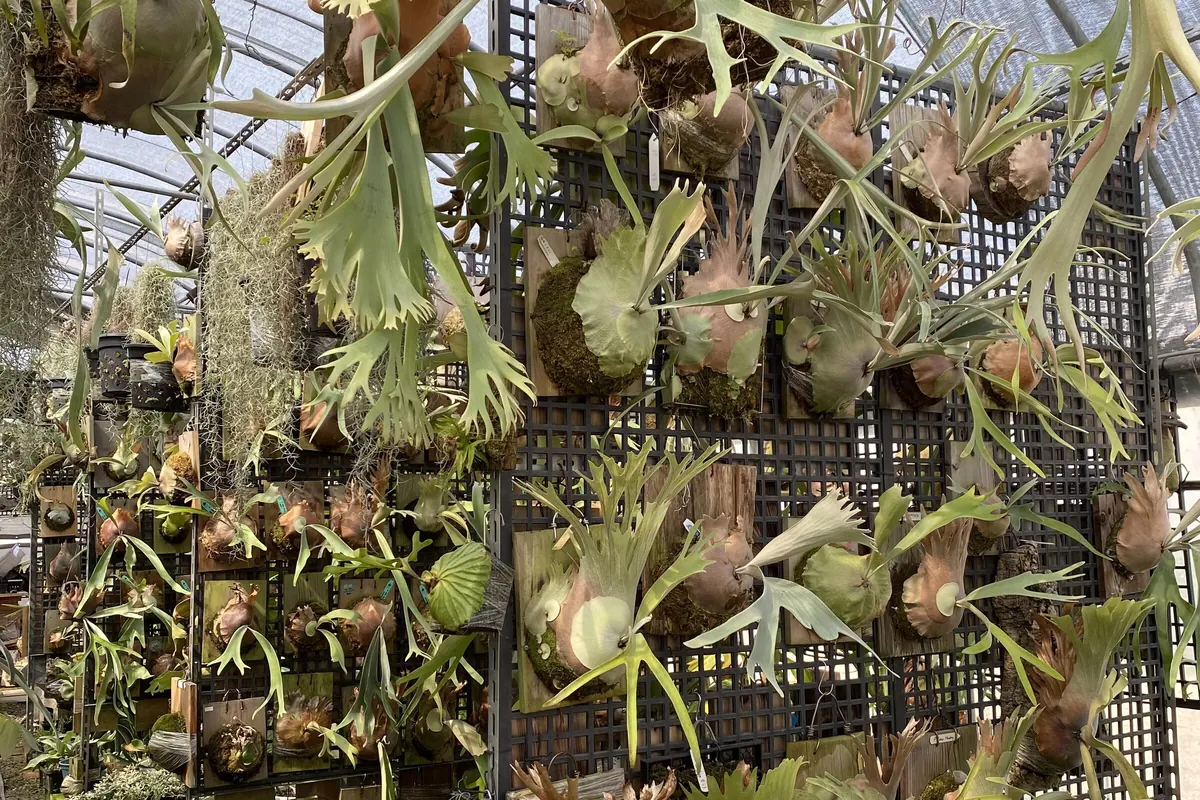
Platycerium care at a glance
| Light | Bright, diffused light. Shade 50–70% in summer and autumn and 30% in spring and winter, aiming for 5,000–20,000 lux. Most Platycerium want more light than other ferns, but direct sun burns the fronds. Indoors: bright indirect light, or grow lights for 16–20 hours a day. Light in the Textbook → |
|---|---|
| Temperature | Best between 15 and 30 °C. Keep plants above 10 °C to be safe. P. ridleyi and P. coronarium prefer to stay warm all year. Bring plants indoors or into a heated space in a cold snap. Temperature → |
| Humidity & air | 50–80% humidity with gentle, constant air movement. Humid air only helps when it keeps moving; still, saturated air around a wet medium brings rot and algae. Near-100% humidity is for recovery boxes only. Humidity → |
| Watering | Water when the moss surface is dry and the plant feels light when you lift it, before the fronds go soft. Soak the whole mount or pot, or water heavily for 20–30 minutes. As a guide: about weekly for mounted plants in a warm greenhouse in summer, every 2–3 weeks indoors and in winter. Water the medium, not the fronds, and water in the morning. Watering → |
| Feeding | Little is needed. Either a few slow-release pellets under the plant when you mount it, or a weak liquid feed while it is actively growing, but not both. With RO or rain water, use a fertiliser that contains calcium and magnesium. Do not feed plants that are recovering or sitting below 15 °C. Feeding → |
| Medium & mounting | Sphagnum moss or shredded bark, on a board, in a basket or in a plastic pot. Never soil. We do not recommend ball mounts. How to mount → |
| Leave alone | The old brown shield fronds (they protect the roots and hold water) and the fine white hairs on the fronds (they cut water loss). Do not peel or wipe them. Parts of the plant → |
These are starting points from our greenhouse, not fixed rules. Adjust them to your own light, temperature and air, and judge each plant by its central bud.
Care guides by topic
- How to mount a staghorn fernBoards, moss, where to tie, and when to move up a size.
- Pups and dividingWhich species make pups, which never do, and how to cut one off.
- Growing from sporesFive steps, with photos, and a realistic timeline.
- After shippingHelping a plant recover in its first few weeks after shipping.
Growing Platycerium indoors
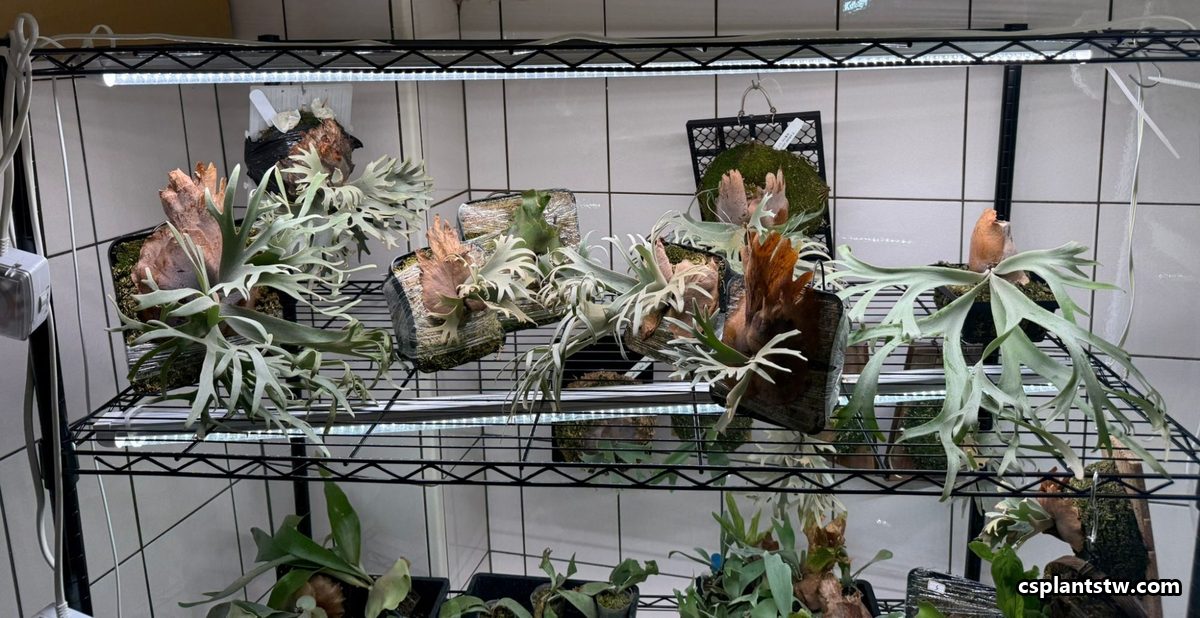
Platycerium does well indoors. It needs no soil and gets fewer pests than most houseplants, though it still needs regular checks. The targets are the same as in the greenhouse: 15–30 °C, 50–80% humidity and 5,000–20,000 lux. Indoors that means bright, indirect light or grow lights for 16–20 hours a day, and a small fan running for air movement. See Growing Platycerium indoors and pests and diseases in the Textbook.
Care differs by species
The figures above suit most Platycerium, but species differ. P. veitchii takes more sun and drier air than most. P. ridleyi wants warmth, high humidity and strong air movement. Some species, such as P. quadridichotomum and P. wallichii, want a drier rest in the cool season. Each Platycerium type page has a "How to grow" section for its group.
Keep reading
Looking for plants? See Platycerium by type, with mother-plant photos, or the full availability list.
Questions about a plant? Ask us on WhatsApp, email or Instagram.